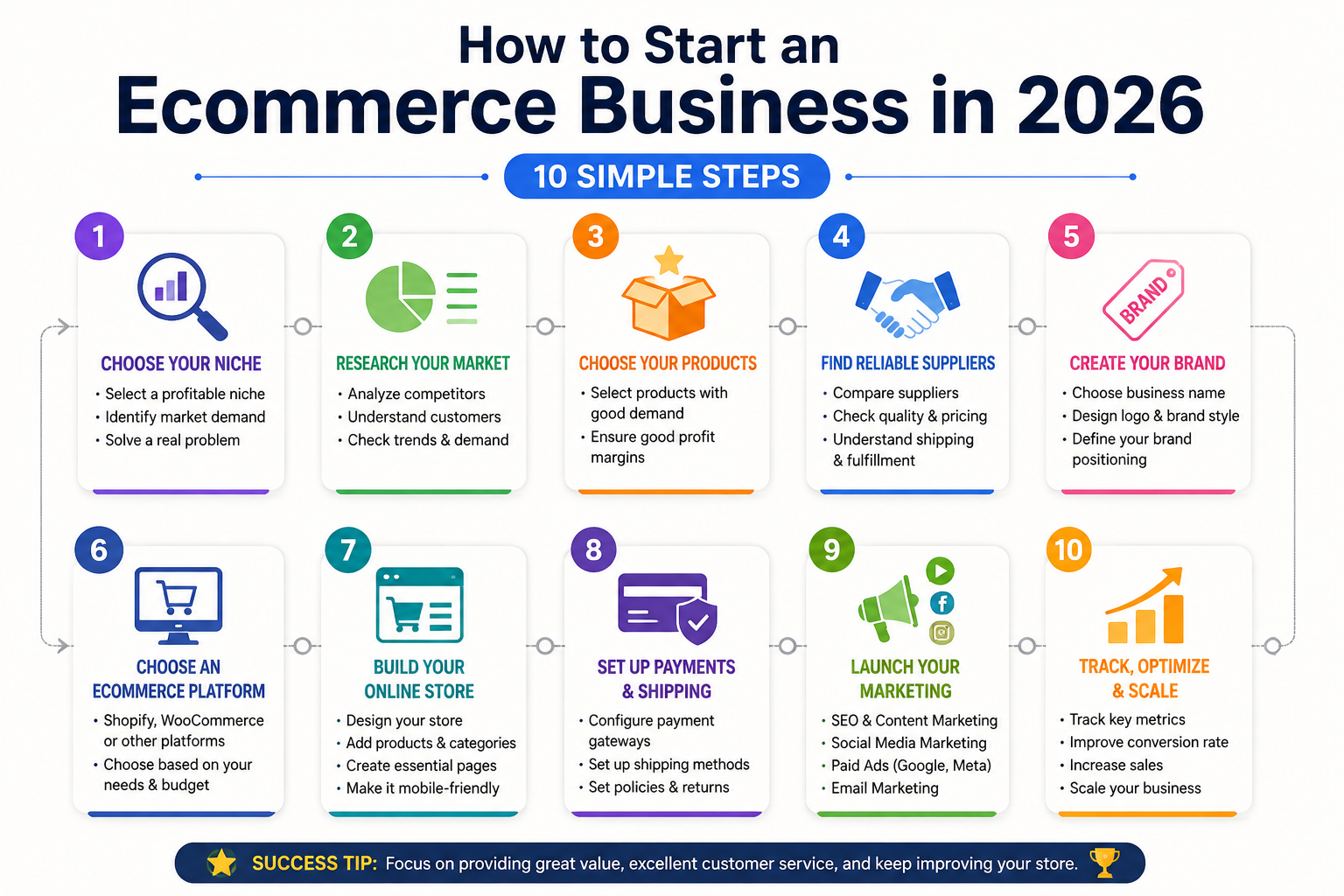
Ecommerce is now about 19% of all US retail sales, and it’s growing at roughly double the rate of retail overall. That’s the good news. The bad news is that the easy money is gone — the cheap-goods-from-overseas playbook that built a thousand YouTube gurus stopped working in 2025.
Here’s what actually starting a store looks like now.
First, understand what changed
The single biggest shift: the US killed the $800 de minimis exemption in August 2025. Every package entering the country now owes duties and needs customs paperwork — no exceptions for small shipments.
Translation: the classic dropshipping model, where you list a $25 gadget from China and let a supplier ship it directly to your customer, is largely dead. That $25 product now lands at $40-60 after duties. Your margin evaporates, and your customer gets a surprise bill at the door.
This isn’t a reason not to start. It’s a reason to start differently. Domestic suppliers, bulk importing with duties priced in, print-on-demand from US facilities, and digital products all still work fine — and there’s less competition than there was three years ago.
Step 1: Pick a product you can actually defend
Don’t start with “what’s trending.” Trending products attract fifty competitors within a month and you’ll all race to the bottom on price.
Start with one of these instead:
- Something you know. A hobby, a job, a community you’re already part of. Domain knowledge is a real moat.
- Something annoying to ship. Bulky, fragile, or heavy items scare off overseas competitors. That’s a feature.
- Something with repeat purchase. Consumables beat one-time buys. Acquiring a customer is expensive; selling to them twelve times is how you make it back.
Then check the boring stuff: can you buy it for roughly a third of what you’ll sell it for? If your margin is under 40%, ads will eat you alive.
Step 2: Validate before you build
The most common beginner mistake is spending three months on a beautiful website for a product nobody wants.
Do this instead. Buy 10-20 units. Sell them on a marketplace — Etsy, eBay, Amazon, Facebook Marketplace, whatever fits. Or post about it in a subreddit or Discord where your customer already hangs out. If you can’t sell twenty units by hand, a website won’t fix that.
This costs a few hundred dollars and a couple weekends, and it will save you from the expensive version of the same lesson.
Step 3: Build the store (cheaply)
Once you have proof, build. Realistic budget: $500 to $2,000 for a lean launch, more if you’re stocking real inventory.
- Platform: Shopify Basic is $39/month ($29 billed annually) and is the default for a reason. WooCommerce is cheaper but you maintain it yourself.
- Theme: Use a free one. Nobody has ever failed because of their theme.
- Apps: Install as few as possible. App fees quietly turn a $39/month store into a $200/month store.
- Photos: This is where to spend. Your product photos are your storefront, your salesperson, and your brand. Bad photos kill more stores than bad products.
Also handle the unglamorous parts: register the business, get an EIN, open a separate bank account, and set up sales tax collection. Your platform can automate most of the tax piece.
Step 4: Budget for marketing — it’s the real cost
Here’s what nobody tells beginners: your ad spend will exceed every other expense combined. Platform fees are rounding errors.
Plan on $500-1,000 minimum for your first 90 days of testing, and expect most of it to be tuition. You’re not buying sales at first; you’re buying data about which audience and which message works.
Start with one channel. Not five. If your product is visual, that’s probably Meta or TikTok ads. If people search for what you sell, that’s Google. Pick the one that matches how customers find your product and get good at it before adding another.
Step 5: Survive month six
Most stores die between month three and month six, when the initial excitement is gone and the numbers are mediocre. Two things get you through:
Track the right number. Customer acquisition cost versus lifetime value. If it costs $30 to get a customer who spends $45 once, you have a hobby that loses money. If they come back twice a year, you have a business.
Email your customers. Email is the only channel you own — no algorithm decides who sees it. Every store should collect emails from day one and send something useful at least twice a month.
The honest summary
Starting is cheap. Getting to profitable is not. Budget $2,000-5,000 and six months before you draw any conclusions, and treat the first 90 days as an experiment rather than a launch.
The stores that work in 2026 aren’t the ones with the slickest funnel. They’re the ones selling something specific to people who actually wanted it, with margins that survive the new cost of shipping things.